1. Greetings to Canada! We have a quite tough winter here in Czech Republic. How does weather look like in Canada? Climate during seasons is quite balanced here, every season has its pros and cons. What is your relation to the seasons and weather in particular? Do you feel somehow fascinated by these natural manners?
Canada of course has quite the reputation of being snowy and cold...fairly similar to Czech winters, I think. We are from Toronto, though, which does not get all that much snow in the winter, especially compared to other Canadian cities, like Montreal or Winnipeg. And in the summer it can get quite hot and hummid...so we have our ups and downs. Canadians like to talk about the weather a lot, but I don't think that we personally have a particular relationship or fascination with weather.
2. Let‘s focus on the music itself. NADJA is not unknown territory for our readers. What made you to create this project? What was your former view on music, your inspiration and goal?
I started NADJA as a solo project in about 2003 as something of a flipside to my solo work -- which was largely ambient, quiet, and gentle. With NADJA I wanted to make loud, heavy, and noisy music -- it was still ambient and drone-based and used the same methodology as my solo work, but with a different outcome. Leah joined the project in 2005 so we could play live and make NADJA more than just a one-person studio project.
3. Year 2010 has begun recently. With regard to productive past of the band I would like to ask what can we expect from NADJA in this year. Which territories shall your music uncover?
We have a few new albums forthcoming: collaborations with Troum and OvO, a new full length on Essence Music, Autopergamene, and a 10" on Substantia Innominata, Ruins of Morning. We also have a DVD release, Drone Fields/White Nights, forthcoming with Beta-Lactam Ring Records, which will have almost 6 hours of music on it.
4. It has been said a lot about the reasons behind tribute albums and cover songs. Last year you have released an album full of cover version “When I See The Sun It Always Shines On TV” which showed your approach to songs from Codeine, Swans but also Cure or Slayer. What does the covering of songs means for you and why you decided to release the whole cover album?
We wanted to do something fun -- especially in a genre which is not especially known for its sense of humour. And it was also a means of illustrating our musical roots.
5. If I should chose one album which appeals to me most it would be”ìThe Bungled and The Botched”. How you created this album and what has lead you to compose such intriguing lyrical concept? In addition what does this album means for you as its creators?
Well, to be perfectly honest, I don't remember exactly what our motivation for this album was...beyond wanting to incorporate different textures/timbres and instrumentation -- in this case with more use of piano, acoustic guitar, and flute. Our songs are usually quite simply structured, so often the outcome of a composition is determined more by the improvisational aspects of our performance and the recording process, rather than the compositional -- this was certainly the case with Bungled.
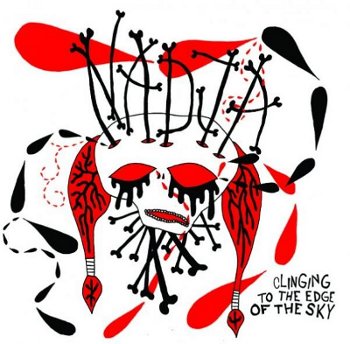
6. Do not judge book by its cover they say. But on the other hand the graphic design of the album is also very important since it can augment the feeling or message of the album. NADJA’s discography has several albums with very unusual design (“Desire in Uneasiness” or already mentioned “The Bungled and The Botched” for example). What can you tell me about this graphic aspect and how important is look for you?
Graphic design is certainly important -- especially as we like to consider our releases objects in themselves and more than just the music they contain. We also find that both metal and experimental artwork can be rather cliched and stereotypical, so we like to experiment (or have friends do so) with covers and artwork as much as we do with the sounds themselves.
7. Since the last two years you have released several enterprises where you collaborated with others musicians and bands. What kind of impression this cooperation has left in you? What about organisation and the resulting cooperation? Do you think that the growth of this cooperation was rewarding for NADJA?
A. We find a collaboration is successful when whomever we are working with does something unexpected or changes our sound or somehow affects us (either personally or sonically) in a way that we might not ourselves. This doesn't always happen, of course, but when it does -- even just in small moments -- it makes a collaboration rewarding for us. We have been trying to get away from digital/online-only collaborations precisely because it is more difficult to achieve those moments that way -- not always, of course, but often the collaborations we do with people in person are much more fruitful.
8. It hasn’t been long since you played in Czech Republic. I wonder what impression has playing in Prague left in you. Was it interesting, enjoyable or not? Can we look forward to NADJA playing in Czech Republic again?
We have played Prague a few times now, yes, and the response has been quite good and it is a very interesting city to visit and see. We have yet to play anywhere else in the Czech Republic, though, which would be interesting to do.
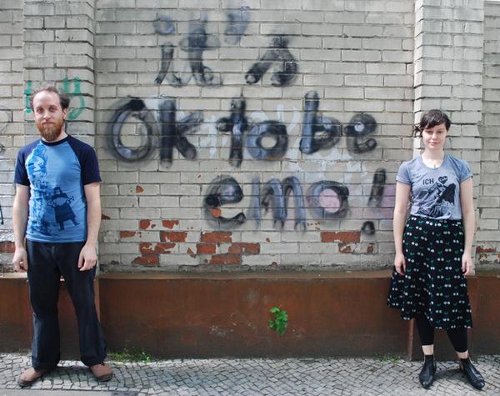
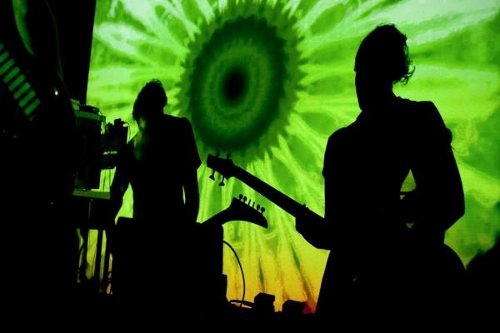
9. Let’s stay at the gigs topic. Have you had the particular vision of how the live performances should proceed since the beginning or that idea came to you later? What do you think about the gigs as a performer?
In terms of the evolution of our performances, I think we have tried to remove ourselves more and more from the concert, so that the focus is more on the music than us making it. This is not because we dislike performing, but more about the nature of the music -- that it should be an immersive experience.
10. Canada is home to variety of unusual and usually unknown artists. How is the living of musicians and composer in your country? I don’t mean only creative background but also cooperation and support between the particular musicians. Have some Canadian band caught your interest lately?
There are a lot of bands from Canada. Both Toronto and Montreal, two of the biggest cities, have quite active scenes. But it is very difficult to be a musician in Canada because the country is so big. We have toured and played more in Europe, and even America, than we have in Canada simply because the distances in Canada are so big and the population so small, it is difficult to simply cover one's travel costs, let alone try to make some money to live on. For example, it is a 5 or 6 hour flight to Vancouver from Toronto -- which is the same time it takes to fly to London, England. So we've only played Vancouver once, but we've played London many times.